
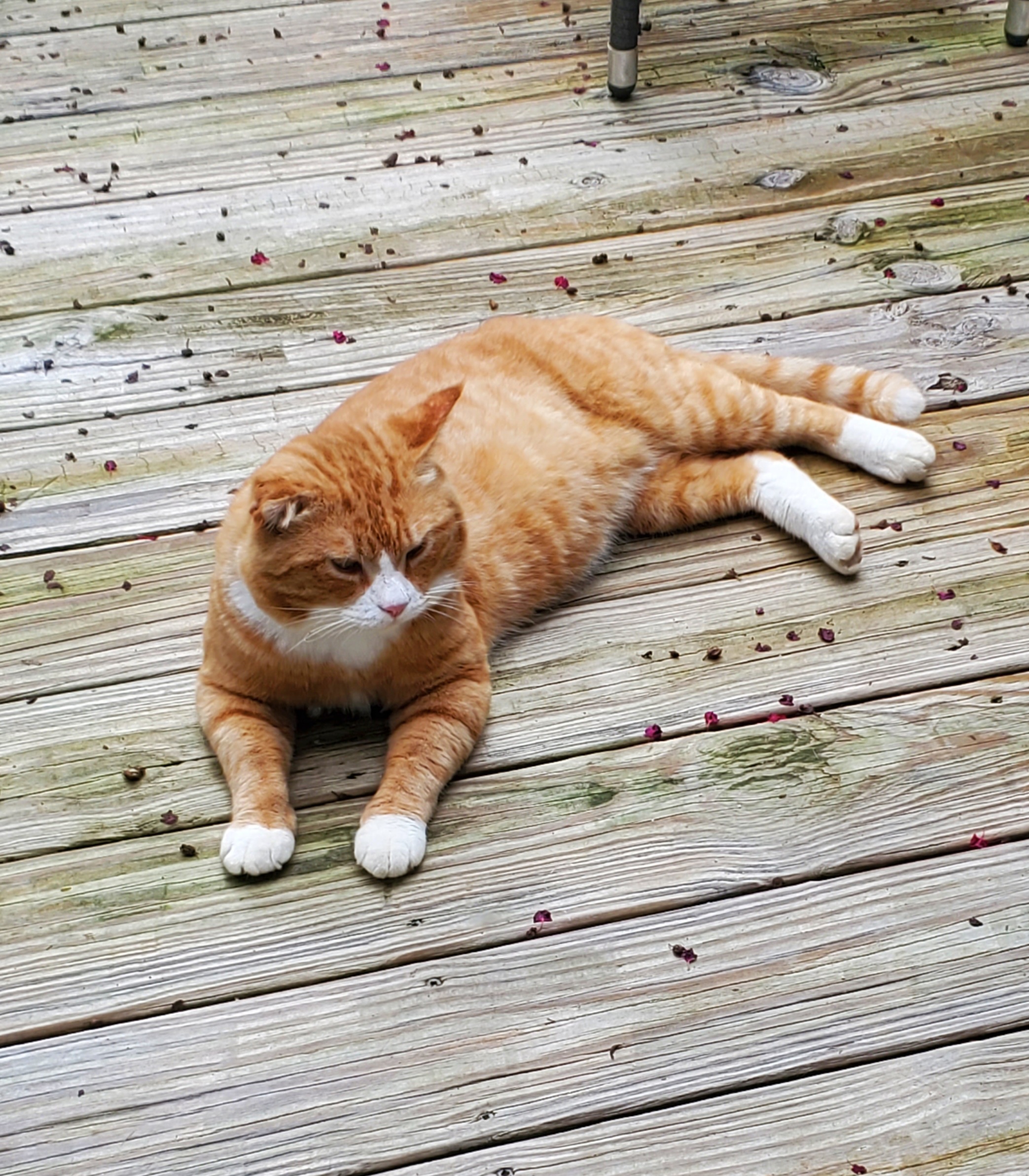
Community cats are outdoor, free-roaming domestic cats who do not have a conventional indoor owner. They may be friendly strays, wary semi-social cats, or feral cats who have had little or no meaningful contact with people. You may see one cat passing through your yard, or a small group living near a food source and shelter.
At Justice Cats, we believe cats belong indoors whenever that is possible and safe. A cat outdoors deserves help, not assumptions. Our first goal is always to identify a lost or abandoned cat, find an indoor foster or adopter for a cat who can live with people, and prevent more cats from being born outdoors. For truly unsocialized cats who cannot safely transition indoors, a carefully monitored colony and Trap-Neuter-Return may be the safest available option.
Community cat, stray cat, or feral cat: what is the difference?
- A stray cat is usually socialized to people. They may approach, meow, make eye contact, or allow touch. A stray may be lost, abandoned, or living outdoors without a home.
- A feral cat is not socialized to people. They are generally frightened by close human contact and may not be able to live safely as indoor pets, particularly as adults.
- Community cat is a broad term that can include both. It describes cats living outdoors in a neighborhood, industrial area, farm, or other shared space.
Not every cat outdoors is a community cat. Some are owned pets who are allowed outside. Before assuming a friendly cat needs help, ask nearby neighbors, check local lost-pet posts, and, when it is safe and appropriate, have a veterinarian or shelter scan for a microchip.
Indoor placement comes first
A friendly cat should never be written off as “feral” simply because they are outdoors. Many are lost pets, abandoned cats, or cats who have been surviving outside long enough to become cautious. If a cat is socialized, our priority should be getting them safely indoors, locating an owner if they have one, or connecting them with foster care and adoption.
Kittens and young cats may also have a much better chance at a safe indoor life when they can be fostered and socialized early. Any plan should be based on the individual cat, their behavior, their health, and the resources available to keep them safe.
What does an ear tip mean?
An ear tip is a small, straight portion removed from the tip of one ear while a cat is safely under anesthesia for spay/neuter surgery. It is a widely used visual marker that tells rescuers and animal-control staff the cat has already been sterilized and vaccinated through a community-cat program.
An ear tip does not mean a cat never needs help. It does mean they should not be trapped again merely for a repeat surgery. If an ear-tipped cat appears ill, injured, underweight, or in danger, contact a veterinarian or experienced rescue for guidance.
When TNR and monitored colony care are the last safe option
Trap-Neuter-Return (TNR) is used for cats who cannot safely be placed indoors and who have an established, monitored outdoor colony. Cats are humanely trapped, taken to a veterinary clinic to be spayed or neutered and vaccinated, ear-tipped, and then returned only to the known location where a committed caregiver is monitoring them.
TNR prevents new litters and reduces behaviors associated with mating, including yowling, fighting, roaming, and spraying. It is not a replacement for indoor placement when a cat is socialized and can be safely fostered or adopted. It is a harm-reduction approach for cats who would otherwise be left to reproduce outdoors without care.
How to care for a monitored community-cat colony responsibly
For the cats who must remain outdoors, kindness needs to be consistent, clean, and paired with a real plan.
- Monitor every cat. Know who is in the colony, who is ear-tipped, and whether a new unaltered cat has arrived. New cats need a prompt TNR plan.
- Feed on a schedule. Put food out at the same place and time each day, and remove uneaten food after the cats finish. This keeps the area cleaner and helps avoid attracting wildlife or insects.
- Provide fresh water. Clean water matters year-round, especially in extreme heat and freezing weather.
- Offer dry, weatherproof shelter. A simple insulated shelter in a quiet, protected location can make a meaningful difference. Straw is generally better than blankets inside outdoor shelters because blankets retain moisture.
- Keep the feeding area tidy. Use washable bowls or a dedicated feeding station, pick up trash, and do not leave food overnight.
- Work with neighbors. A calm conversation and a clean routine can prevent conflict. Humane deterrents, such as motion-activated sprinklers, can help keep cats away from areas where they are not wanted.
What if you find kittens outdoors?
Do not assume kittens are abandoned simply because you do not see their mother. A mother cat may be nearby finding food or waiting for people to leave. If kittens look clean, warm, and quiet, observe from a distance before intervening. Their mother is usually their best caretaker in the first weeks of life.
If kittens are in immediate danger, cold, injured, visibly ill, or truly alone for an extended period, contact a local rescue, shelter, or veterinarian. Friendly young kittens may be candidates for foster care and adoption. Their mother should be assessed individually, with indoor placement pursued whenever it is safe and realistic.
When to get urgent help
Contact a veterinarian or experienced rescue promptly if a cat has trouble breathing, significant bleeding, an obvious injury, severe eye or nasal discharge, cannot stand or eat, is trapped in a dangerous location, or is in immediate danger. Never try to handle a frightened cat with bare hands. Use a secure humane trap or ask an experienced rescuer for help.
How you can help
You do not have to manage a whole colony to make a difference. You can foster a friendly cat or kittens, help transport cats to a clinic, donate food or traps, offer a safe indoor placement, share lost-cat posts, or support a local rescue doing this work every day.
Every cat deserves safety and care. Keeping cats indoors is the best outcome whenever it can be achieved. For cats who genuinely cannot be placed indoors, responsible monitoring, sterilization, and compassionate daily care are far better than leaving them unseen and unsupported.
For general background on community cats and TNR, see Alley Cat Allies and the ASPCA’s community-cat guide. This article is educational and is not a substitute for veterinary advice.