
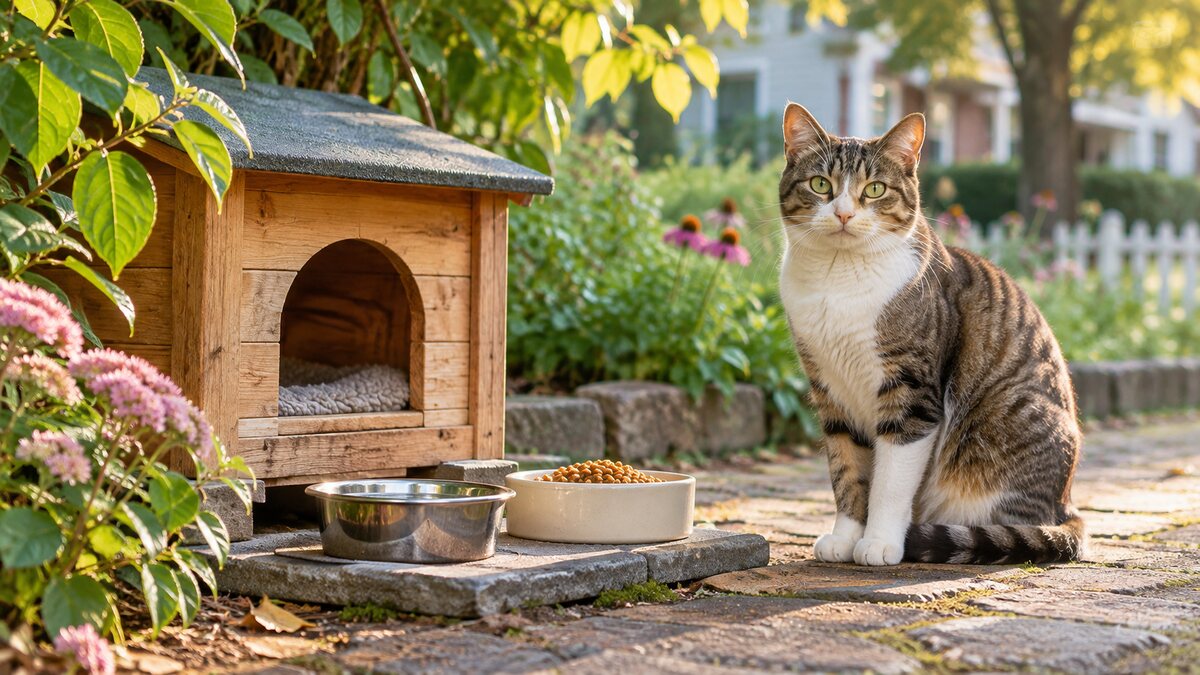
When the temperature drops, it is natural to worry about the cats who live outdoors in your neighborhood. Community cats need reliable food, unfrozen water, dry shelter, and thoughtful daily care during winter. But the best answer is not always simply putting a cat back outside or moving a cat somewhere unfamiliar.
At Justice Cats, we believe all cats belong indoors. We only return a cat outdoors when there is no other safe option and we know a responsible caregiver is monitoring the colony. For cats who must remain outside, winter preparation matters.
Start with the safest option: indoor placement
Before treating outdoor life as the only answer, pause and assess the cat. A friendly cat, a lost pet, a cat who is ill or injured, a nursing mother, or a kitten may need a very different plan. Scan for a microchip, check local lost-pet resources, and contact a rescue or veterinarian when help is needed. Some cats need patience to adjust indoors, but safety should be the goal whenever it is realistic.
Read our guide to what to do when you find a stray cat.
Use straw, not blankets, in outdoor cat shelters
A winter shelter should be dry, insulated, elevated off the cold ground, and positioned with the entrance facing away from the wind. Fill it with straw, not hay, towels, or blankets. Straw helps cats burrow into dry insulation. Blankets and towels hold moisture, then become cold and damp.
Check shelters regularly after rain, snow, or heavy wind. Replace wet or flattened straw, clear entrances, and make sure the shelter has not shifted or flooded. More than one shelter gives cats options and helps reduce crowding.
Keep food and water clean, consistent, and available
Winter care works best with a predictable routine. Feed at the same time each day in one clean, sheltered location. Put down only what the cats will eat promptly, then remove leftover food and dishes. This protects the feeding area, reduces conflict with neighbors, and avoids attracting wildlife.
Cats use more energy staying warm in cold weather, so caregivers may need to offer slightly larger portions. Fresh water is essential every day. A heated outdoor-safe water bowl is helpful; otherwise, use plastic or ceramic dishes, check them often, and replace frozen water immediately. Avoid metal bowls in freezing conditions.
Make winter feeding stations part of the plan
A simple feeding station keeps food out of rain and snow, makes cleanup easier, and gives caregivers a consistent place to observe each cat. Keep it tidy and discreet. Property-owner permission matters when the station is not on your own property, and a clean setup is better for cats, caregivers, and neighbors.
Watch for cold-weather dangers
- Cars: Cats may shelter near or inside warm engine compartments. Check beneath the vehicle and tap the hood before starting it.
- Antifreeze: Even small amounts can be dangerous. Clean up spills right away and keep containers sealed.
- Ice-melting chemicals: Avoid placing salt or chemical deicers near shelters and feeding areas. They can irritate paws and be harmful if licked.
- Severe weather: Before a storm, make sure shelters are secure and that cats have enough food and unfrozen water. Clear paths and shelter entrances as soon as it is safe to do so.
Know when a community cat needs help now
Contact a veterinarian or rescue for a cat who appears injured, sick, unable to move normally, severely thin, wet and unable to get warm, or in obvious distress. A cat who suddenly becomes friendly may also be a lost or abandoned pet rather than an established community cat.
Winter colony care is not just about getting through a cold night. It is about steady, humane monitoring, clean routines, and continuing to look for safe indoor solutions. Visit the Justice Cats Community Cat & Cat Care Library for more practical guides.